Amblyseius Swirskii Prevention Sachets
Preventative Control for Thrips & Broad Mites
The Heavy Hitter for Warm, Humid Grow Rooms.
If you’ve fought off thrips or broad mites before, you already know the drill: they are microscopic, sneaky, and nearly impossible to spot until the damage is done.
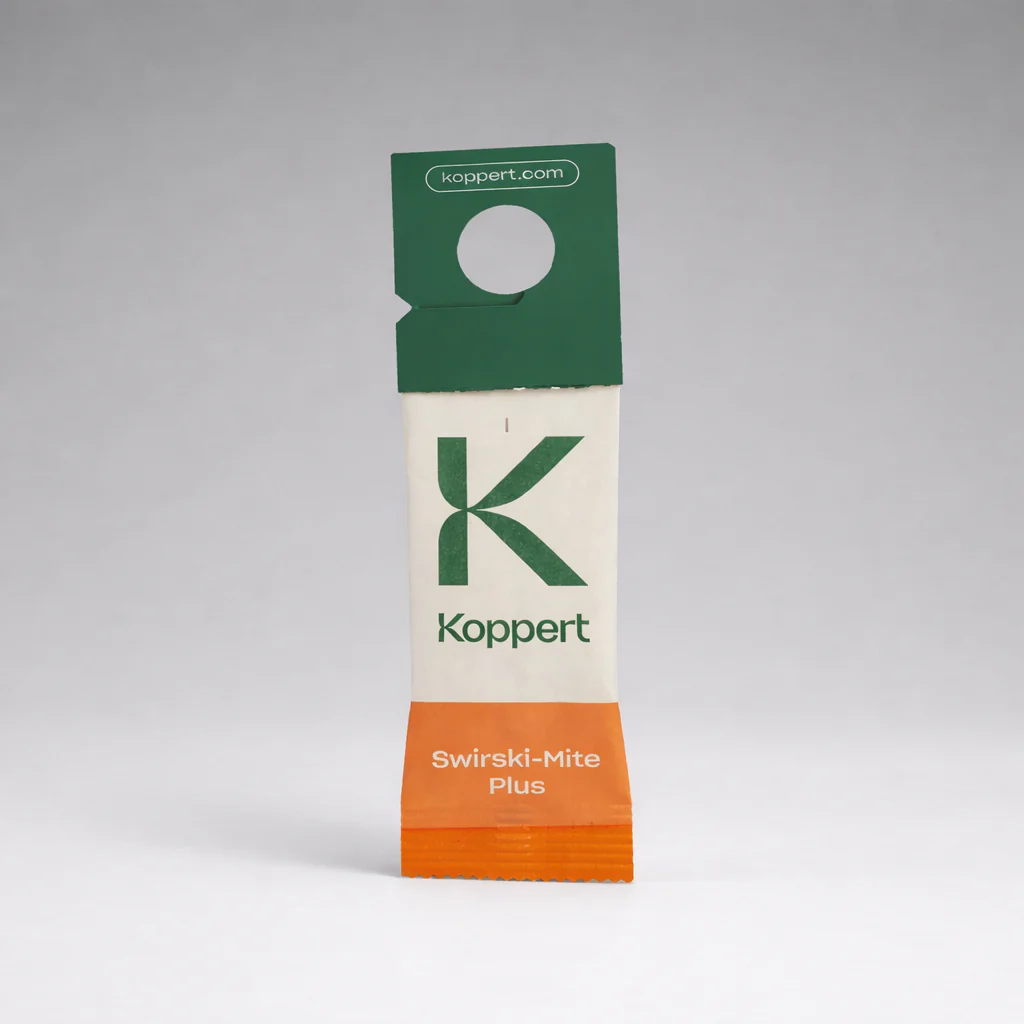
Amblyseius swirskii is the polyphagous (generalist) predator you want in your corner to make sure it doesn't get that far again. These slow-release sachets contain a breeding colony of mites that patrol your plants for up to 4 weeks, consuming the microscopic eggs and larvae of pests before they can grow into a visible problem.
How It Works: The voracious Generalist
A. swirskii is an aggressive predator that thrives in warm, humid environments. Unlike specialists that only eat one thing, swirskii has a wide appetite.
-
Slow Release: Each sachet acts as a mini-nursery, releasing eggs, juveniles, and adults continuously over 2–4 weeks.
-
Preventative Patrol: As they exit the sachet, they disperse across the canopy, hunting for soft-bodied prey in the earliest stages of development.
-
Pollen Feeder: In the absence of pests, swirskii can survive on pollen or supplemental food (like our Good Bug Diet), making them excellent for pre-emptive release.
Targeted Pests
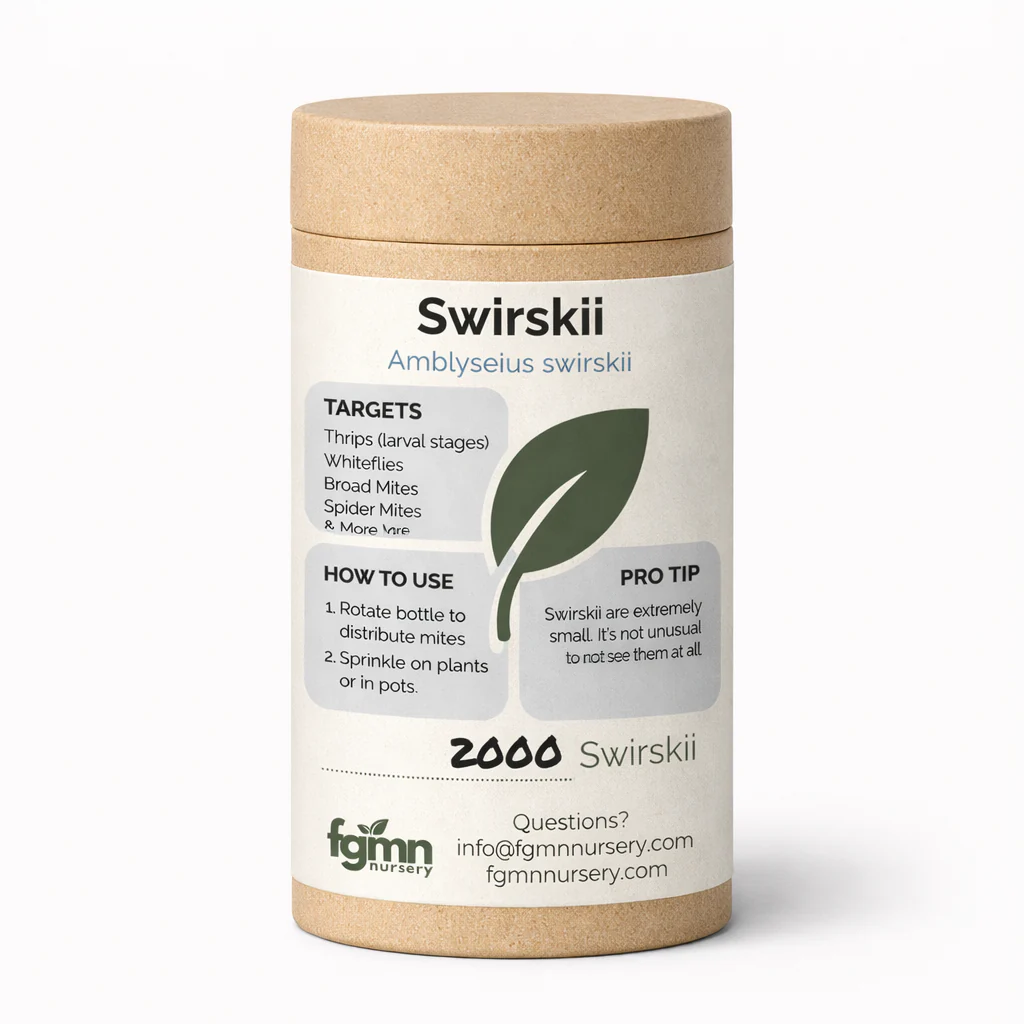
Amblyseius swirskii is famous for its ability to control multiple pest families simultaneously.
| Target Pest | Scientific Name | Targeted Stages |
| Thrips | Frankliniella spp. | Eggs and Larvae (L1/L2) |
| Whiteflies | Bemisia, Trialeurodes | Eggs and Larvae |
| Broad Mites | Polyphagotarsonemus latus | All life stages |
| Russet Mites | Aculops lycopersici | All life stages |
Ideal Conditions
Swirskii are tropical predators. They perform best when your environment mimics their natural habitat.
-
Temperature: 77–85°F is ideal. (Minimum 68°F for activity).
-
Humidity: 60–80% Relative Humidity (RH) is optimal.
-
Best For: Greenhouses, grow tents, indoor cabinets, and tropical plant collections.
Note: If your space runs cool (below 68°F) or very dry, consider using Amblyseius cucumeris or Amblyseius californicus instead.
Application Instructions
Hang High, Keep Dry.
-
Preventative Rate: 1 sachet per plant (for large plants) or 1 sachet every 2–3 feet (for dense canopies).
-
Placement: Hang the sachet on a branch or stem, just above the soil line but shaded by leaves if possible.
-
Maintenance: Do not open the sachets; mites exit through a pre-engineered vent.
-
Frequency: Replace every 2–4 weeks depending on temperature (hotter temps = faster release).
Pro Tips for Success
-
Feed Them: If you are releasing into a "clean" room with no pests, dusting with a supplemental food source (like pollen or Good Bug Diet) helps establish the population.
-
No Sprays: Avoid using oils or foliar sprays while sachets are active. Even organic sprays can clog the sachet vents or harm the predators.
-
Layering Strategy: If you have an active infestation, use Swirskii in bottles for an immediate knockdown, then hang sachets to maintain long-term control.
Frequently Asked Questions
Can I see the mites working?
Likely not. A. swirskii are tiny (less than 1mm), fast-moving, and often hide on the undersides of leaves. Trust the process—if you aren't seeing new pest damage, they are doing their job.
Are they safe for pets?
Yes. Amblyseius swirskii is 100% non-toxic and safe for humans, pets, and pollinators.
What if my humidity drops?
Brief drops in humidity are fine, but sustained dryness (below 50% RH) will dry out the sachet media and reduce the lifespan of the colony.
Shipping & Storage
-
Freshness: Ships via 2-Day Shipping with a live arrival guarantee.
-
Usage: Hang immediately upon arrival for best results.
-
Storage: If necessary, store at 50–55°F for up to 48 hours.
-
Warning: Do not store in a standard refrigerator or freezer (the air is too dry).
Preventative Control for Thrips & Broad Mites
The Heavy Hitter for Warm, Humid Grow Rooms.
If you’ve fought off thrips or broad mites before, you already know the drill: they are microscopic, sneaky, and nearly impossible to spot until the damage is done.
Amblyseius swirskii is the polyphagous (generalist) predator you want in your corner to make sure it doesn't get that far again. These slow-release sachets contain a breeding colony of mites that patrol your plants for up to 4 weeks, consuming the microscopic eggs and larvae of pests before they can grow into a visible problem.
How It Works: The voracious Generalist
A. swirskii is an aggressive predator that thrives in warm, humid environments. Unlike specialists that only eat one thing, swirskii has a wide appetite.
-
Slow Release: Each sachet acts as a mini-nursery, releasing eggs, juveniles, and adults continuously over 2–4 weeks.
-
Preventative Patrol: As they exit the sachet, they disperse across the canopy, hunting for soft-bodied prey in the earliest stages of development.
-
Pollen Feeder: In the absence of pests, swirskii can survive on pollen or supplemental food (like our Good Bug Diet), making them excellent for pre-emptive release.
Targeted Pests
Amblyseius swirskii is famous for its ability to control multiple pest families simultaneously.
| Target Pest | Scientific Name | Targeted Stages |
| Thrips | Frankliniella spp. | Eggs and Larvae (L1/L2) |
| Whiteflies | Bemisia, Trialeurodes | Eggs and Larvae |
| Broad Mites | Polyphagotarsonemus latus | All life stages |
| Russet Mites | Aculops lycopersici | All life stages |
Ideal Conditions
Swirskii are tropical predators. They perform best when your environment mimics their natural habitat.
-
Temperature: 77–85°F is ideal. (Minimum 68°F for activity).
-
Humidity: 60–80% Relative Humidity (RH) is optimal.
-
Best For: Greenhouses, grow tents, indoor cabinets, and tropical plant collections.
Note: If your space runs cool (below 68°F) or very dry, consider using Amblyseius cucumeris or Amblyseius californicus instead.
Application Instructions
Hang High, Keep Dry.
-
Preventative Rate: 1 sachet per plant (for large plants) or 1 sachet every 2–3 feet (for dense canopies).
-
Placement: Hang the sachet on a branch or stem, just above the soil line but shaded by leaves if possible.
-
Maintenance: Do not open the sachets; mites exit through a pre-engineered vent.
-
Frequency: Replace every 2–4 weeks depending on temperature (hotter temps = faster release).
Pro Tips for Success
-
Feed Them: If you are releasing into a "clean" room with no pests, dusting with a supplemental food source (like pollen or Good Bug Diet) helps establish the population.
-
No Sprays: Avoid using oils or foliar sprays while sachets are active. Even organic sprays can clog the sachet vents or harm the predators.
-
Layering Strategy: If you have an active infestation, use Swirskii in bottles for an immediate knockdown, then hang sachets to maintain long-term control.
Frequently Asked Questions
Can I see the mites working?
Likely not. A. swirskii are tiny (less than 1mm), fast-moving, and often hide on the undersides of leaves. Trust the process—if you aren't seeing new pest damage, they are doing their job.
Are they safe for pets?
Yes. Amblyseius swirskii is 100% non-toxic and safe for humans, pets, and pollinators.
What if my humidity drops?
Brief drops in humidity are fine, but sustained dryness (below 50% RH) will dry out the sachet media and reduce the lifespan of the colony.
Shipping & Storage
-
Freshness: Ships via 2-Day Shipping with a live arrival guarantee.
-
Usage: Hang immediately upon arrival for best results.
-
Storage: If necessary, store at 50–55°F for up to 48 hours.
-
Warning: Do not store in a standard refrigerator or freezer (the air is too dry).
Description
Preventative Control for Thrips & Broad Mites
The Heavy Hitter for Warm, Humid Grow Rooms.
If you’ve fought off thrips or broad mites before, you already know the drill: they are microscopic, sneaky, and nearly impossible to spot until the damage is done.
Amblyseius swirskii is the polyphagous (generalist) predator you want in your corner to make sure it doesn't get that far again. These slow-release sachets contain a breeding colony of mites that patrol your plants for up to 4 weeks, consuming the microscopic eggs and larvae of pests before they can grow into a visible problem.
How It Works: The voracious Generalist
A. swirskii is an aggressive predator that thrives in warm, humid environments. Unlike specialists that only eat one thing, swirskii has a wide appetite.
-
Slow Release: Each sachet acts as a mini-nursery, releasing eggs, juveniles, and adults continuously over 2–4 weeks.
-
Preventative Patrol: As they exit the sachet, they disperse across the canopy, hunting for soft-bodied prey in the earliest stages of development.
-
Pollen Feeder: In the absence of pests, swirskii can survive on pollen or supplemental food (like our Good Bug Diet), making them excellent for pre-emptive release.
Targeted Pests
Amblyseius swirskii is famous for its ability to control multiple pest families simultaneously.
| Target Pest | Scientific Name | Targeted Stages |
| Thrips | Frankliniella spp. | Eggs and Larvae (L1/L2) |
| Whiteflies | Bemisia, Trialeurodes | Eggs and Larvae |
| Broad Mites | Polyphagotarsonemus latus | All life stages |
| Russet Mites | Aculops lycopersici | All life stages |
Ideal Conditions
Swirskii are tropical predators. They perform best when your environment mimics their natural habitat.
-
Temperature: 77–85°F is ideal. (Minimum 68°F for activity).
-
Humidity: 60–80% Relative Humidity (RH) is optimal.
-
Best For: Greenhouses, grow tents, indoor cabinets, and tropical plant collections.
Note: If your space runs cool (below 68°F) or very dry, consider using Amblyseius cucumeris or Amblyseius californicus instead.
Application Instructions
Hang High, Keep Dry.
-
Preventative Rate: 1 sachet per plant (for large plants) or 1 sachet every 2–3 feet (for dense canopies).
-
Placement: Hang the sachet on a branch or stem, just above the soil line but shaded by leaves if possible.
-
Maintenance: Do not open the sachets; mites exit through a pre-engineered vent.
-
Frequency: Replace every 2–4 weeks depending on temperature (hotter temps = faster release).
Pro Tips for Success
-
Feed Them: If you are releasing into a "clean" room with no pests, dusting with a supplemental food source (like pollen or Good Bug Diet) helps establish the population.
-
No Sprays: Avoid using oils or foliar sprays while sachets are active. Even organic sprays can clog the sachet vents or harm the predators.
-
Layering Strategy: If you have an active infestation, use Swirskii in bottles for an immediate knockdown, then hang sachets to maintain long-term control.
Frequently Asked Questions
Can I see the mites working?
Likely not. A. swirskii are tiny (less than 1mm), fast-moving, and often hide on the undersides of leaves. Trust the process—if you aren't seeing new pest damage, they are doing their job.
Are they safe for pets?
Yes. Amblyseius swirskii is 100% non-toxic and safe for humans, pets, and pollinators.
What if my humidity drops?
Brief drops in humidity are fine, but sustained dryness (below 50% RH) will dry out the sachet media and reduce the lifespan of the colony.
Shipping & Storage
-
Freshness: Ships via 2-Day Shipping with a live arrival guarantee.
-
Usage: Hang immediately upon arrival for best results.
-
Storage: If necessary, store at 50–55°F for up to 48 hours.
-
Warning: Do not store in a standard refrigerator or freezer (the air is too dry).