Amblyseius Andersoni Prevention Sachets
Multi-Pest Control for Variable Climates
The All-Weather Generalist.
If you’ve dealt with mites before, you know the drill: the damage shows up fast, the webbing follows, and suddenly you’re in full-blown rescue mode.
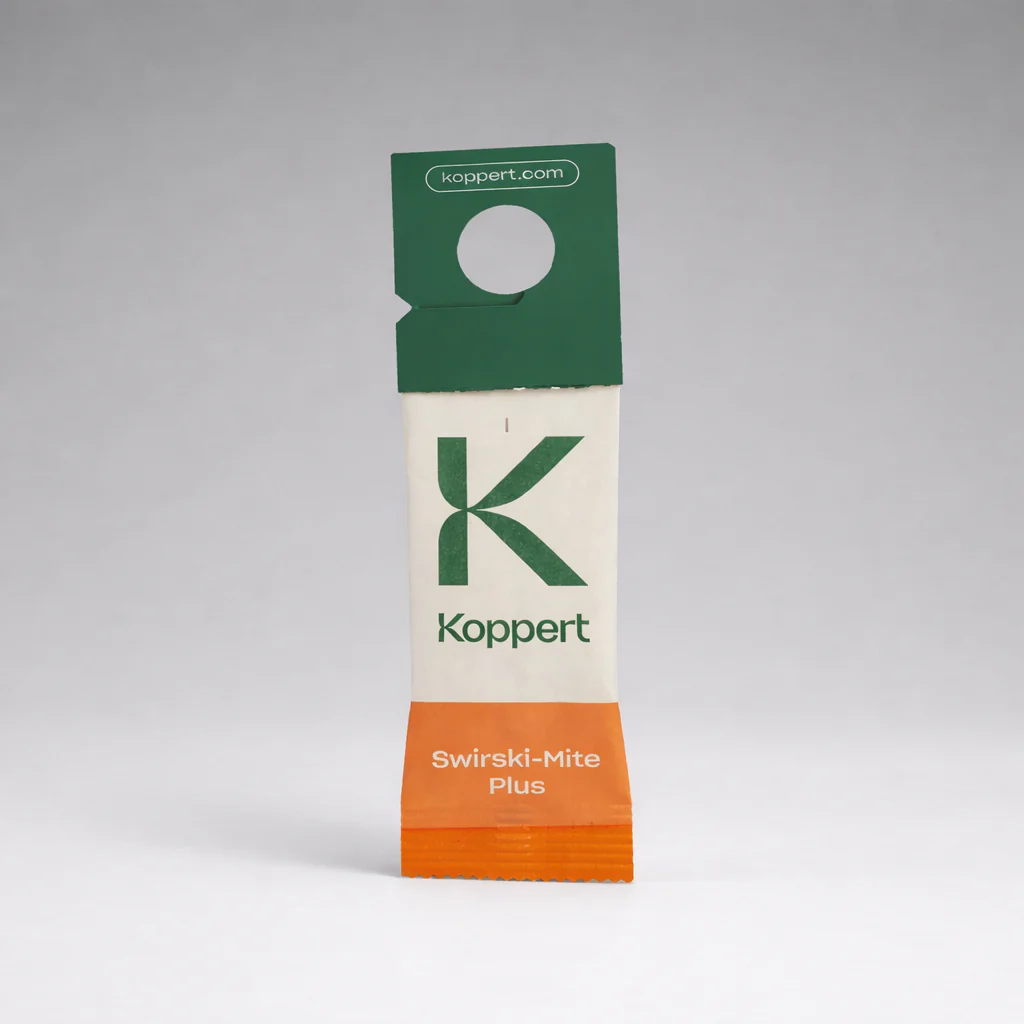
Amblyseius andersoni is the predator that stops that cycle before it spins out of control. While other beneficial mites require perfect greenhouse conditions to survive, Andersoni is built for the real world—where temperatures fluctuate, humidity drops, and pests don't play by the rules. These slow-release sachets deliver consistent, preventative coverage against a broad spectrum of mites, functioning effectively from cool spring mornings to hot summer afternoons.
How It Works: The Versatile Survivor
Amblyseius andersoni is a polyphagous (generalist) predatory mite. It doesn't just hunt one thing; it patrols your plants looking for a wide variety of prey.
-
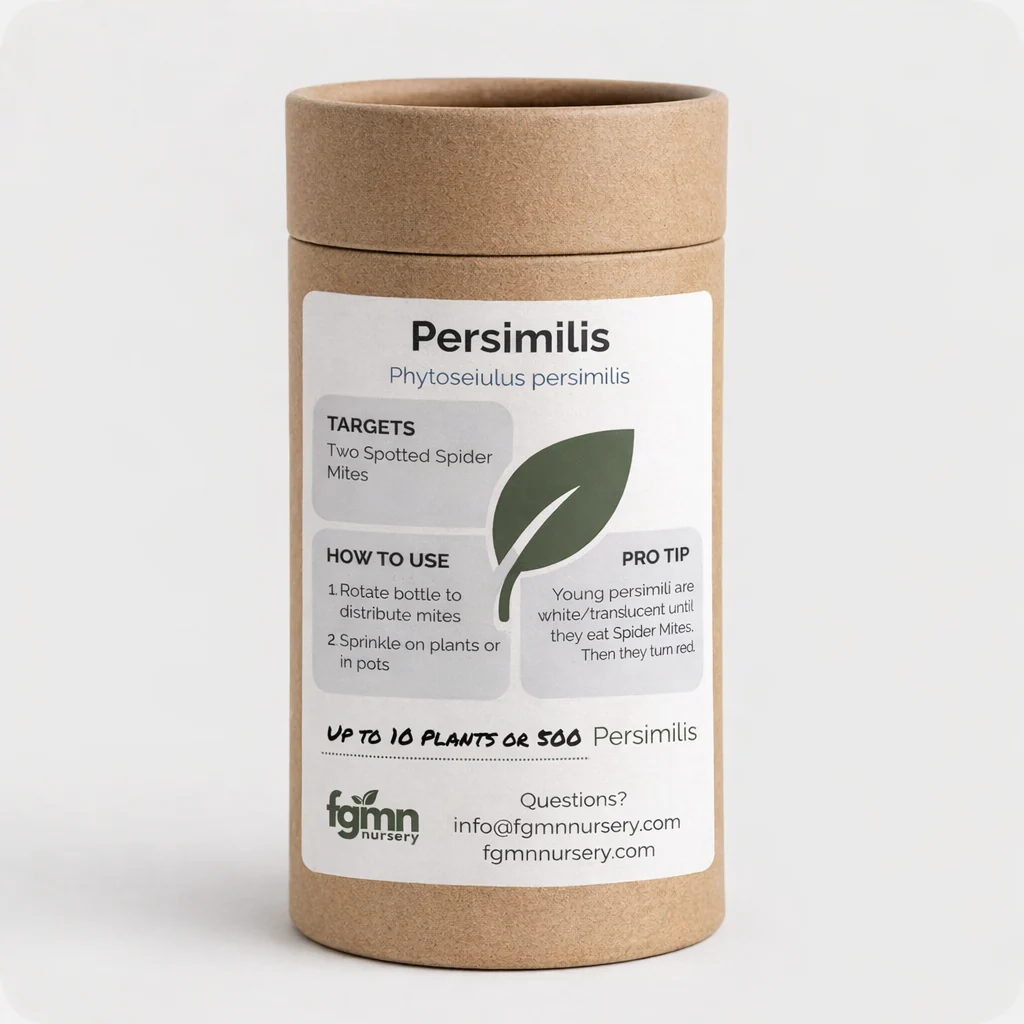
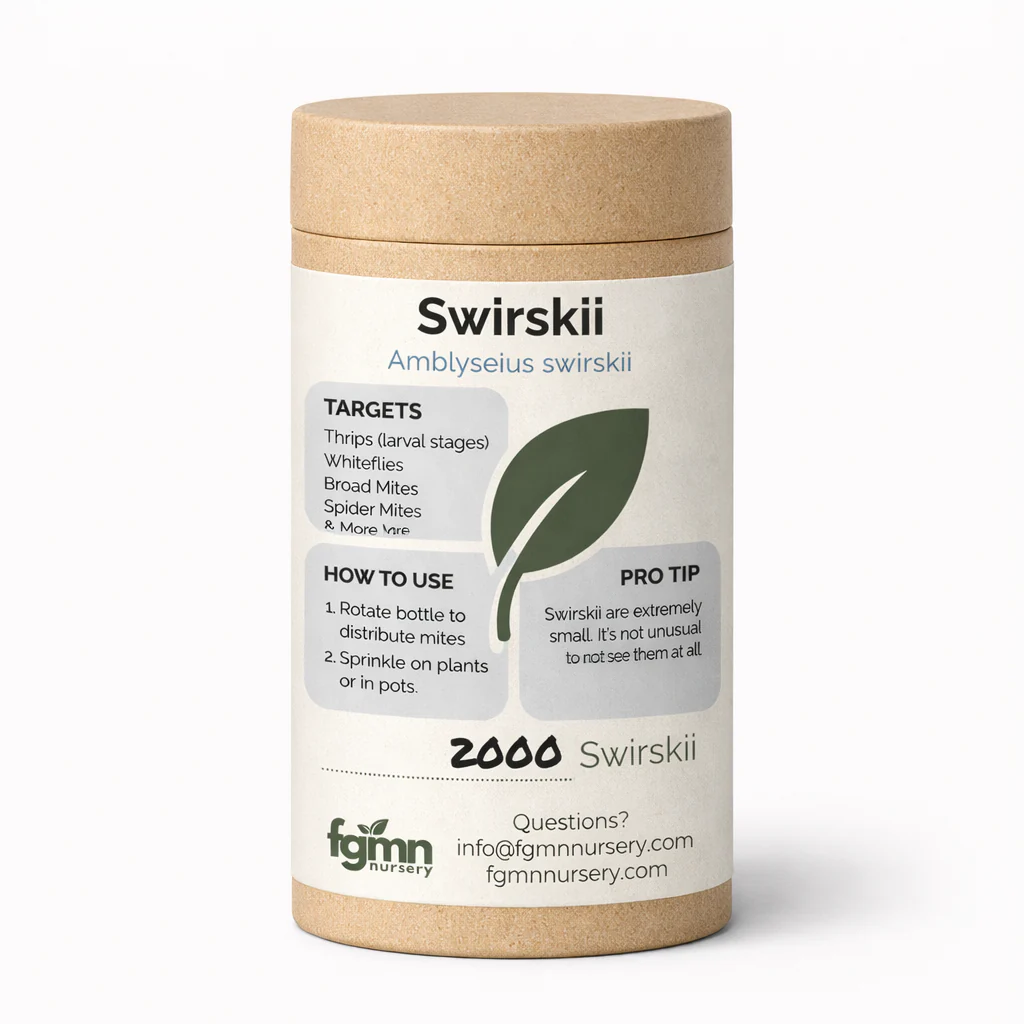
Wide Temperature Range: Unlike Persimilis (which hates heat) or Swirskii (which hates cold), Andersoni remains active between 42°F and 100°F.
-
Dietary Flexibility: If pest populations are low, Andersoni can survive on pollen, fungal spores, and thrips larvae, keeping the population alive and ready for when spider mites inevitably show up.
-
Sustained Release: Each sachet acts as a breeding colony, releasing eggs, nymphs, and adults continuously over 2–4 weeks.
Targeted Pests
Andersoni is your best option for "broad-spectrum" prevention when you aren't sure exactly which mite is attacking, or when you are dealing with multiple species at once.
| Target Pest | Scientific Name | Targeted Signs |
| Spider Mites | Tetranychus spp. | Webbing, stippling, leaf speckling |
| Broad Mites | Polyphagotarsonemus latus | Twisted, hardened new growth |
| Russet Mites | Aculops lycopersici | Bronze, rough-textured leaves ("hemp russet") |
| Cyclamen Mites | Phytonemus pallidus | Deformed growth at the crown |
| Eriophyid Mites | Eriophyidae | Blistering or unexplained leaf curl |
When to Choose Andersoni
Use this predator when your environment is too harsh or unpredictable for other mites.
Ideal For:
-
Variable Environments: Garages, unheated greenhouses, or outdoor crops where temps swing from 40°F at night to 90°F+ during the day.
-
Early/Late Season: Perfect for spring and fall protection when it is too cold for Swirskii.
-
preventative "Stacking": Works excellently alongside Phytoseiulus persimilis to catch what the specialist misses.
-
Ornamentals: Great for broad mite protection on Hoyas, Begonias, and other tropicals.
Application Instructions
Hang High, Keep Dry.
-
Preventative Rate: 1 sachet per plant (for large plants) or 1 sachet every 3 feet (for canopy/rows).
-
Placement: Hang on the main stem, stake, or trellis near the plant canopy.
-
Maintenance: Do not open the sachets; mites exit through a pre-engineered vent.
-
Care: Avoid direct misting or heavy irrigation on the paper sachet itself.
-
Frequency: Replace every 2–4 weeks depending on pest pressure.
Pro Tips
-
Don't wait for webs: This is a shield, not a rescue. Deploy Andersoni early in the season or immediately after a knockdown spray.
-
Skip the chemicals: Residue from pesticides (even some organic oils) can kill these predators. Stop spraying at least 2 weeks before deployment.
-
The "Generalist" Strategy: Because Andersoni eats pollen, you can hang them on flowering plants even before you see pests. They will establish a colony and wait for the bad guys to arrive.
Shipping & Storage
-
Freshness: Ships via 2-Day Air with a live arrival guarantee.
-
Usage: Hang immediately upon arrival for best results.
-
Storage: If necessary, store at 45–55°F for up to 48 hours.
-
Warning: Do not store in a standard refrigerator or freezer (low humidity kills them).
Multi-Pest Control for Variable Climates
The All-Weather Generalist.
If you’ve dealt with mites before, you know the drill: the damage shows up fast, the webbing follows, and suddenly you’re in full-blown rescue mode.
Amblyseius andersoni is the predator that stops that cycle before it spins out of control. While other beneficial mites require perfect greenhouse conditions to survive, Andersoni is built for the real world—where temperatures fluctuate, humidity drops, and pests don't play by the rules. These slow-release sachets deliver consistent, preventative coverage against a broad spectrum of mites, functioning effectively from cool spring mornings to hot summer afternoons.
How It Works: The Versatile Survivor
Amblyseius andersoni is a polyphagous (generalist) predatory mite. It doesn't just hunt one thing; it patrols your plants looking for a wide variety of prey.
-
Wide Temperature Range: Unlike Persimilis (which hates heat) or Swirskii (which hates cold), Andersoni remains active between 42°F and 100°F.
-
Dietary Flexibility: If pest populations are low, Andersoni can survive on pollen, fungal spores, and thrips larvae, keeping the population alive and ready for when spider mites inevitably show up.
-
Sustained Release: Each sachet acts as a breeding colony, releasing eggs, nymphs, and adults continuously over 2–4 weeks.
Targeted Pests
Andersoni is your best option for "broad-spectrum" prevention when you aren't sure exactly which mite is attacking, or when you are dealing with multiple species at once.
| Target Pest | Scientific Name | Targeted Signs |
| Spider Mites | Tetranychus spp. | Webbing, stippling, leaf speckling |
| Broad Mites | Polyphagotarsonemus latus | Twisted, hardened new growth |
| Russet Mites | Aculops lycopersici | Bronze, rough-textured leaves ("hemp russet") |
| Cyclamen Mites | Phytonemus pallidus | Deformed growth at the crown |
| Eriophyid Mites | Eriophyidae | Blistering or unexplained leaf curl |
When to Choose Andersoni
Use this predator when your environment is too harsh or unpredictable for other mites.
Ideal For:
-
Variable Environments: Garages, unheated greenhouses, or outdoor crops where temps swing from 40°F at night to 90°F+ during the day.
-
Early/Late Season: Perfect for spring and fall protection when it is too cold for Swirskii.
-
preventative "Stacking": Works excellently alongside Phytoseiulus persimilis to catch what the specialist misses.
-
Ornamentals: Great for broad mite protection on Hoyas, Begonias, and other tropicals.
Application Instructions
Hang High, Keep Dry.
-
Preventative Rate: 1 sachet per plant (for large plants) or 1 sachet every 3 feet (for canopy/rows).
-
Placement: Hang on the main stem, stake, or trellis near the plant canopy.
-
Maintenance: Do not open the sachets; mites exit through a pre-engineered vent.
-
Care: Avoid direct misting or heavy irrigation on the paper sachet itself.
-
Frequency: Replace every 2–4 weeks depending on pest pressure.
Pro Tips
-
Don't wait for webs: This is a shield, not a rescue. Deploy Andersoni early in the season or immediately after a knockdown spray.
-
Skip the chemicals: Residue from pesticides (even some organic oils) can kill these predators. Stop spraying at least 2 weeks before deployment.
-
The "Generalist" Strategy: Because Andersoni eats pollen, you can hang them on flowering plants even before you see pests. They will establish a colony and wait for the bad guys to arrive.
Shipping & Storage
-
Freshness: Ships via 2-Day Air with a live arrival guarantee.
-
Usage: Hang immediately upon arrival for best results.
-
Storage: If necessary, store at 45–55°F for up to 48 hours.
-
Warning: Do not store in a standard refrigerator or freezer (low humidity kills them).
Original: $4.00
-70%$4.00
$1.20Description
Multi-Pest Control for Variable Climates
The All-Weather Generalist.
If you’ve dealt with mites before, you know the drill: the damage shows up fast, the webbing follows, and suddenly you’re in full-blown rescue mode.
Amblyseius andersoni is the predator that stops that cycle before it spins out of control. While other beneficial mites require perfect greenhouse conditions to survive, Andersoni is built for the real world—where temperatures fluctuate, humidity drops, and pests don't play by the rules. These slow-release sachets deliver consistent, preventative coverage against a broad spectrum of mites, functioning effectively from cool spring mornings to hot summer afternoons.
How It Works: The Versatile Survivor
Amblyseius andersoni is a polyphagous (generalist) predatory mite. It doesn't just hunt one thing; it patrols your plants looking for a wide variety of prey.
-
Wide Temperature Range: Unlike Persimilis (which hates heat) or Swirskii (which hates cold), Andersoni remains active between 42°F and 100°F.
-
Dietary Flexibility: If pest populations are low, Andersoni can survive on pollen, fungal spores, and thrips larvae, keeping the population alive and ready for when spider mites inevitably show up.
-
Sustained Release: Each sachet acts as a breeding colony, releasing eggs, nymphs, and adults continuously over 2–4 weeks.
Targeted Pests
Andersoni is your best option for "broad-spectrum" prevention when you aren't sure exactly which mite is attacking, or when you are dealing with multiple species at once.
| Target Pest | Scientific Name | Targeted Signs |
| Spider Mites | Tetranychus spp. | Webbing, stippling, leaf speckling |
| Broad Mites | Polyphagotarsonemus latus | Twisted, hardened new growth |
| Russet Mites | Aculops lycopersici | Bronze, rough-textured leaves ("hemp russet") |
| Cyclamen Mites | Phytonemus pallidus | Deformed growth at the crown |
| Eriophyid Mites | Eriophyidae | Blistering or unexplained leaf curl |
When to Choose Andersoni
Use this predator when your environment is too harsh or unpredictable for other mites.
Ideal For:
-
Variable Environments: Garages, unheated greenhouses, or outdoor crops where temps swing from 40°F at night to 90°F+ during the day.
-
Early/Late Season: Perfect for spring and fall protection when it is too cold for Swirskii.
-
preventative "Stacking": Works excellently alongside Phytoseiulus persimilis to catch what the specialist misses.
-
Ornamentals: Great for broad mite protection on Hoyas, Begonias, and other tropicals.
Application Instructions
Hang High, Keep Dry.
-
Preventative Rate: 1 sachet per plant (for large plants) or 1 sachet every 3 feet (for canopy/rows).
-
Placement: Hang on the main stem, stake, or trellis near the plant canopy.
-
Maintenance: Do not open the sachets; mites exit through a pre-engineered vent.
-
Care: Avoid direct misting or heavy irrigation on the paper sachet itself.
-
Frequency: Replace every 2–4 weeks depending on pest pressure.
Pro Tips
-
Don't wait for webs: This is a shield, not a rescue. Deploy Andersoni early in the season or immediately after a knockdown spray.
-
Skip the chemicals: Residue from pesticides (even some organic oils) can kill these predators. Stop spraying at least 2 weeks before deployment.
-
The "Generalist" Strategy: Because Andersoni eats pollen, you can hang them on flowering plants even before you see pests. They will establish a colony and wait for the bad guys to arrive.
Shipping & Storage
-
Freshness: Ships via 2-Day Air with a live arrival guarantee.
-
Usage: Hang immediately upon arrival for best results.
-
Storage: If necessary, store at 45–55°F for up to 48 hours.
-
Warning: Do not store in a standard refrigerator or freezer (low humidity kills them).